
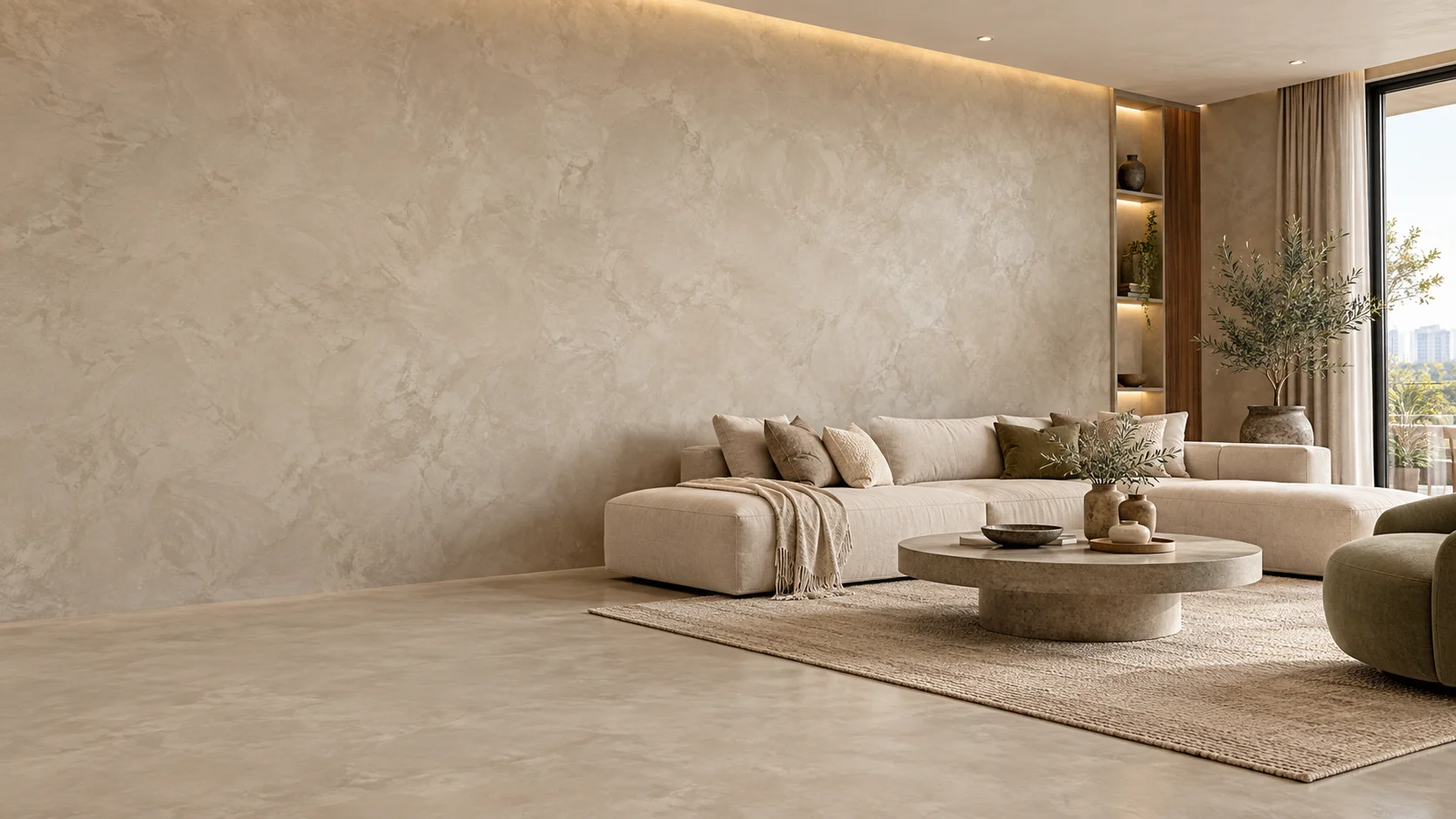

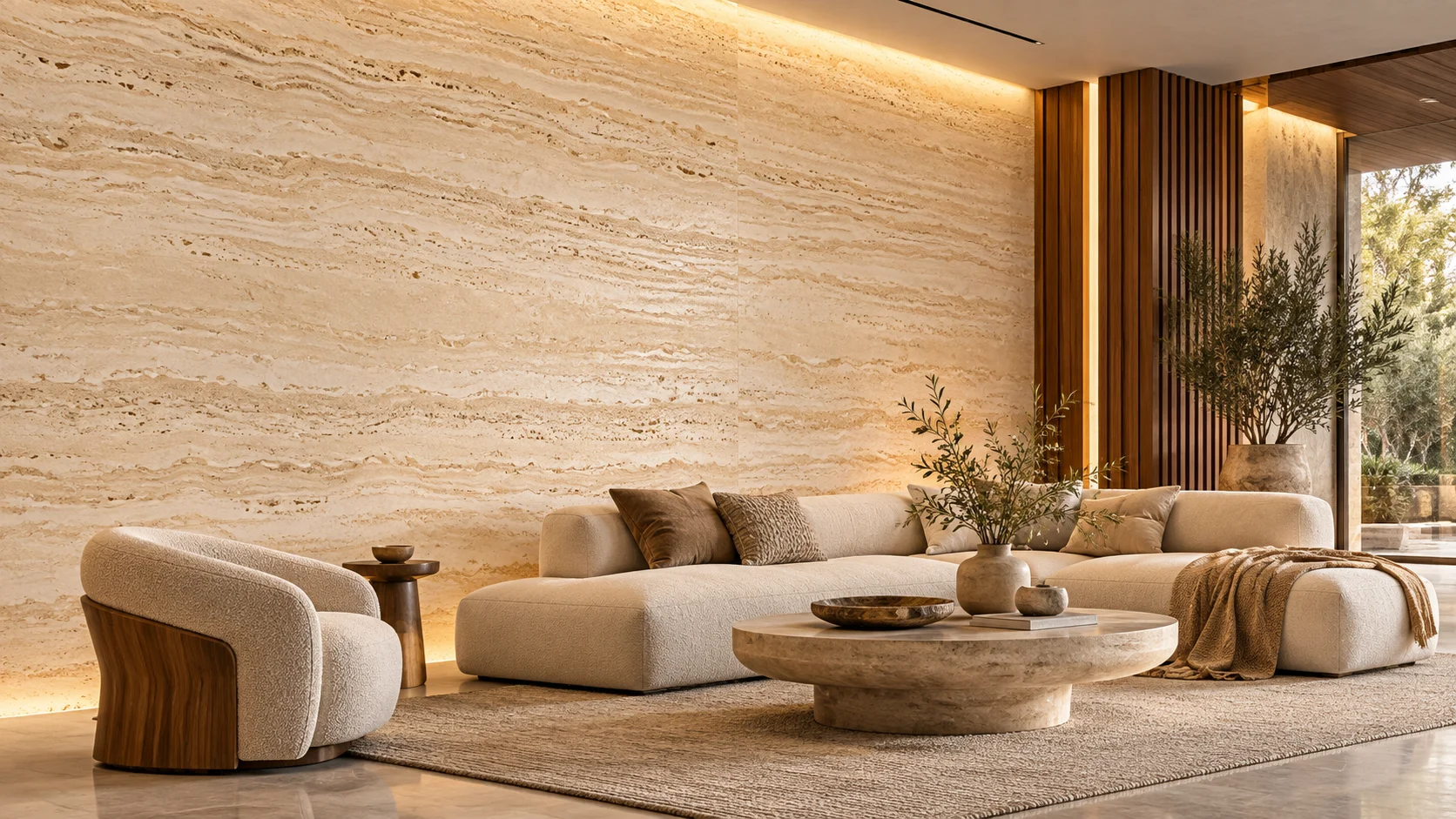
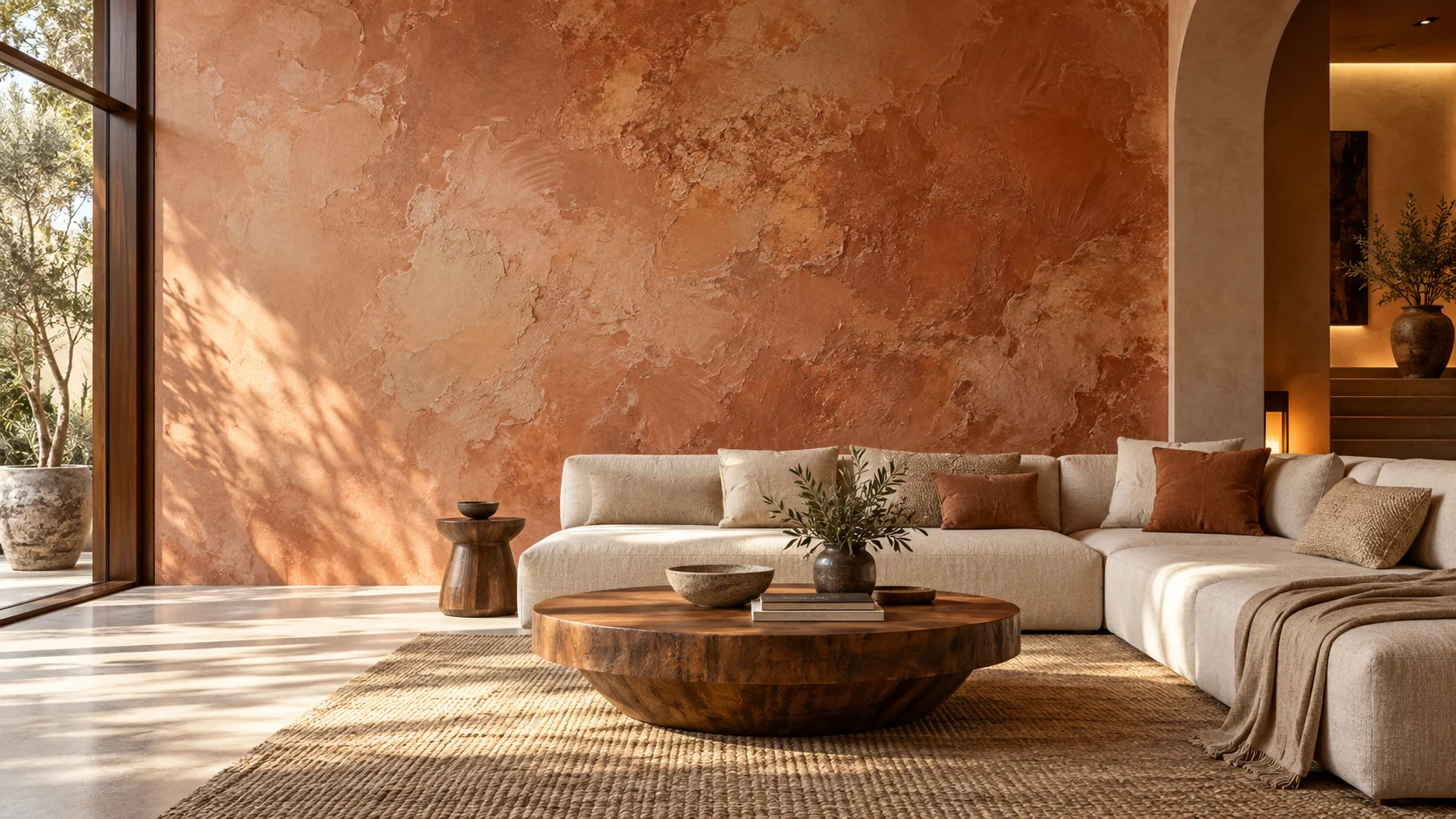

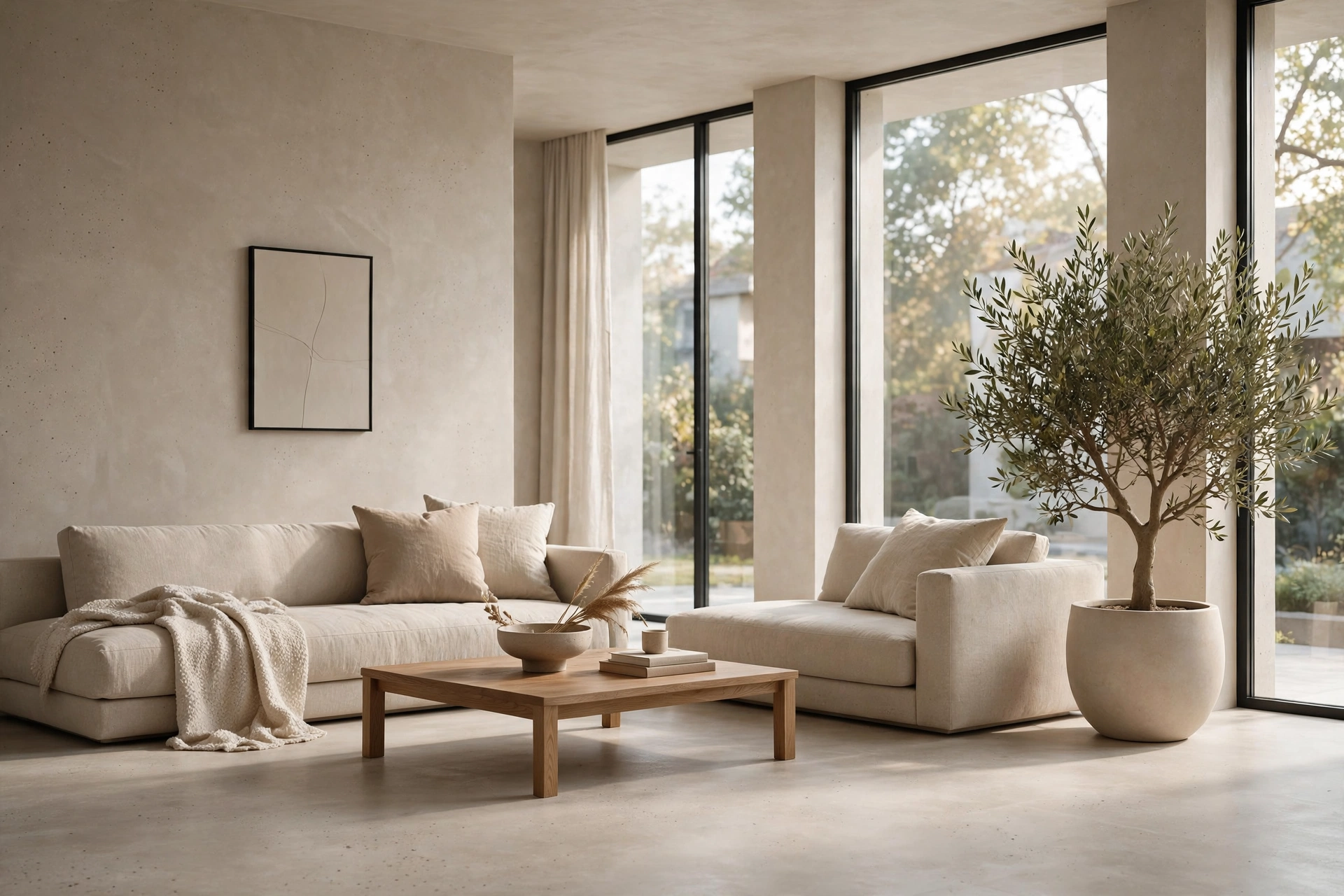
If you’re weighing up microcement vs tiles for your walls or floors, you’re choosing between the seamless modern coating designers love and the tried-and-tested classic. Both have loyal fans — but they behave very differently once installed. In this guide, we compare the two on cost, durability, maintenance and design, so you can make the right call for your space.
What Is Microcement?
Microcement is a thin (2–3 mm) cement-based coating applied in layers over walls, floors and even furniture. It cures into one continuous, joint-free surface with a soft stone-like character. Because it bonds to most stable substrates, it can often go straight over existing tiles — no demolition needed. At Texture Services, microcement is our most requested finish for modern interiors.
What Do We Mean by Traditional Tiles?
Ceramic and porcelain tiles have covered floors and walls for centuries. They come in endless colours and patterns, but every installation is a grid of individual pieces separated by grout lines — and those grout lines shape much of the comparison below.
Cost Comparison
Upfront, tiles usually win on material price: a basic ceramic tile is far cheaper per square foot than microcement. But the full picture is more balanced:
- Material: tiles range from budget to luxury; microcement sits in the mid-to-premium bracket.
- Labour: tiling is labour-intensive (cutting, levelling, grouting). Microcement needs a skilled applicator but covers large areas fast.
- Hidden costs: tiles may need substrate repair and, in renovations, costly demolition of old surfaces. Microcement often skips that step entirely.
- Long term: regrouting or replacing cracked tiles adds up over the years, while a sealed microcement surface asks for little beyond routine cleaning.
For a straight budget renovation, tiles are cheaper on day one. For a long-term, low-maintenance surface, microcement frequently wins on lifetime cost.
Durability and Lifespan
A quality porcelain tile is extremely hard and handles heavy traffic well — but individual tiles can crack on impact, and once a tile cracks, replacement means cutting out grout and finding a matching piece. Microcement, properly applied and sealed, is impact-resistant across its whole surface with no weak joints. With the right sealer for the location (we specify sealers per project), a microcement finish lasts for many years in both homes and commercial spaces.
Maintenance and Hygiene
This is where the difference is starkest. Grout is porous: it stains, harbours mould in wet areas, and needs scrubbing or periodic regrouting. Microcement has no grout lines at all — one wipeable, sealed surface. For bathrooms, kitchens and commercial washrooms, that seamless hygiene is a genuine practical advantage, not just a look.
Design and Aesthetics
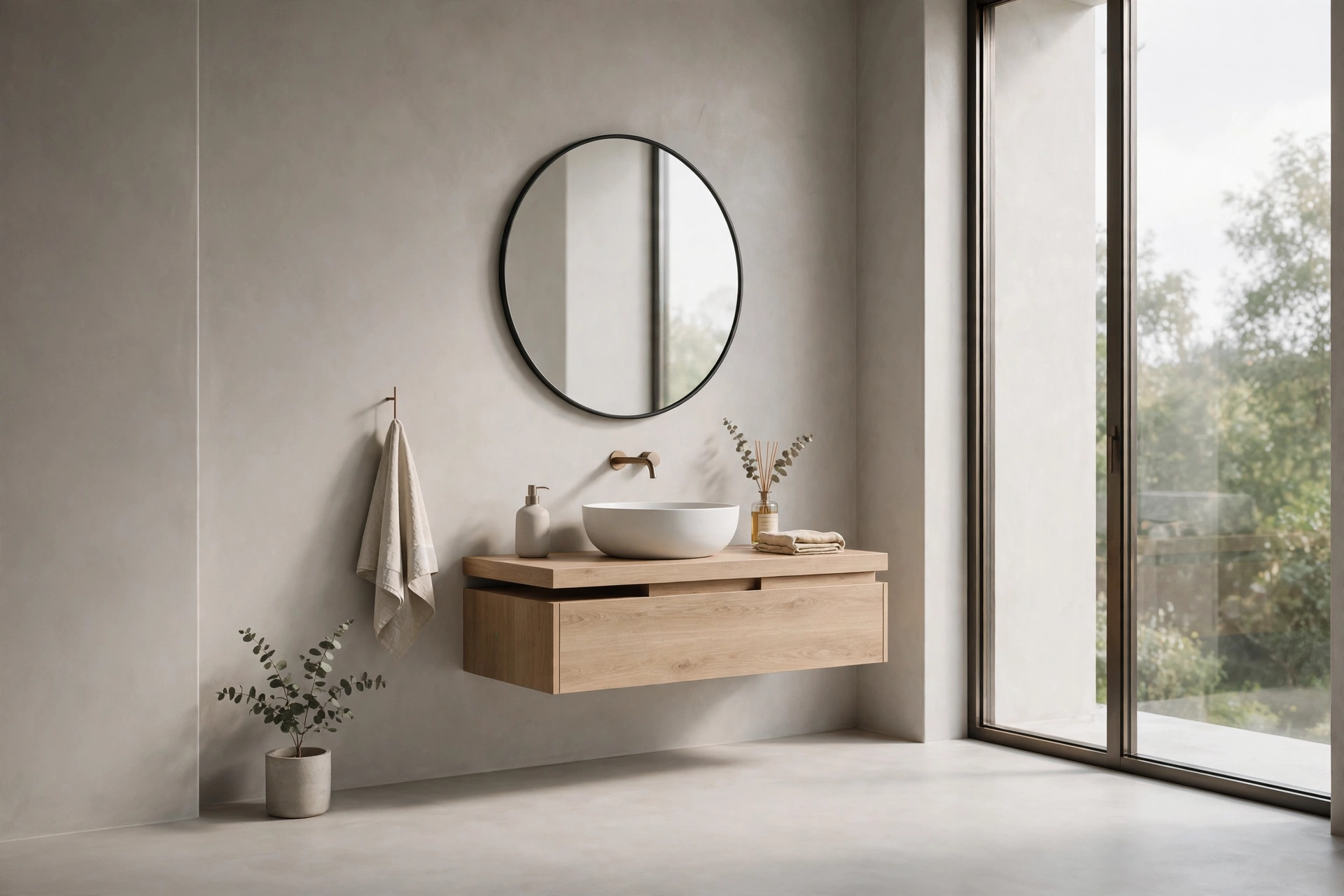
Tiles offer patterns, from subway layouts to Moroccan motifs. Microcement offers something tiles cannot: continuity. Walls flow into floors with zero visual interruption, making small rooms feel larger and open plans feel calmer. Colour is mixed into the material itself, so you get soft tonal movement rather than a printed pattern. If you love the seamless look but want more drama, consider related decorative options like Velvet Texture for light-playing walls or Travertine for natural stone depth.
Installation Time and Mess
Retiling a bathroom means days of demolition, dust and noise. Microcement is applied in thin layers over the existing surface, so most projects finish faster and with far less mess — a major plus for occupied homes and working businesses.
Where Each Option Wins
| Factor | Microcement | Tiles |
|---|---|---|
| Upfront cost | Mid–premium | Budget to luxury |
| Seamless look | Yes — no joints | No — grout grid |
| Maintenance | Low, wipeable | Grout needs care |
| Over existing surfaces | Usually yes | Rarely |
| Pattern variety | Tonal, minimal | Huge range |
| Wet-area hygiene | Excellent | Good, grout dependent |
A Third Option: Seamless Terrazzo Looks
If you like the seamless idea but want visible aggregate character, terrazzo-style finishes are worth a look. Liquid Terrazzo gives a flowing, modern aggregate surface, while Washed Terrazzo brings a more textured stone feel. Terrazzo itself has a long history as a composite of stone chips in a cement binder — you can read more about the material on Wikipedia.
The Verdict
Choose tiles when budget is the top priority or you want bold printed patterns. Choose microcement when you want a seamless, low-maintenance, modern surface — especially in bathrooms, kitchens and open-plan living. Many of our clients start with one feature wall or bathroom to see the difference in person.
Want help deciding for your space? Get a free quote — share your room size and the look you have in mind, and our team will recommend the right finish. Learn more about Texture Services and how we work.